A harness label tells you less than its attachment points, shape and fit. Use this guide to compare the design you are considering, then check the exact product's measurement chart before buying.

Start with our dog harness size chart for chest girth, neck and model-specific measuring instructions.
Step-in and overhead harnesses differ in how your dog wears them
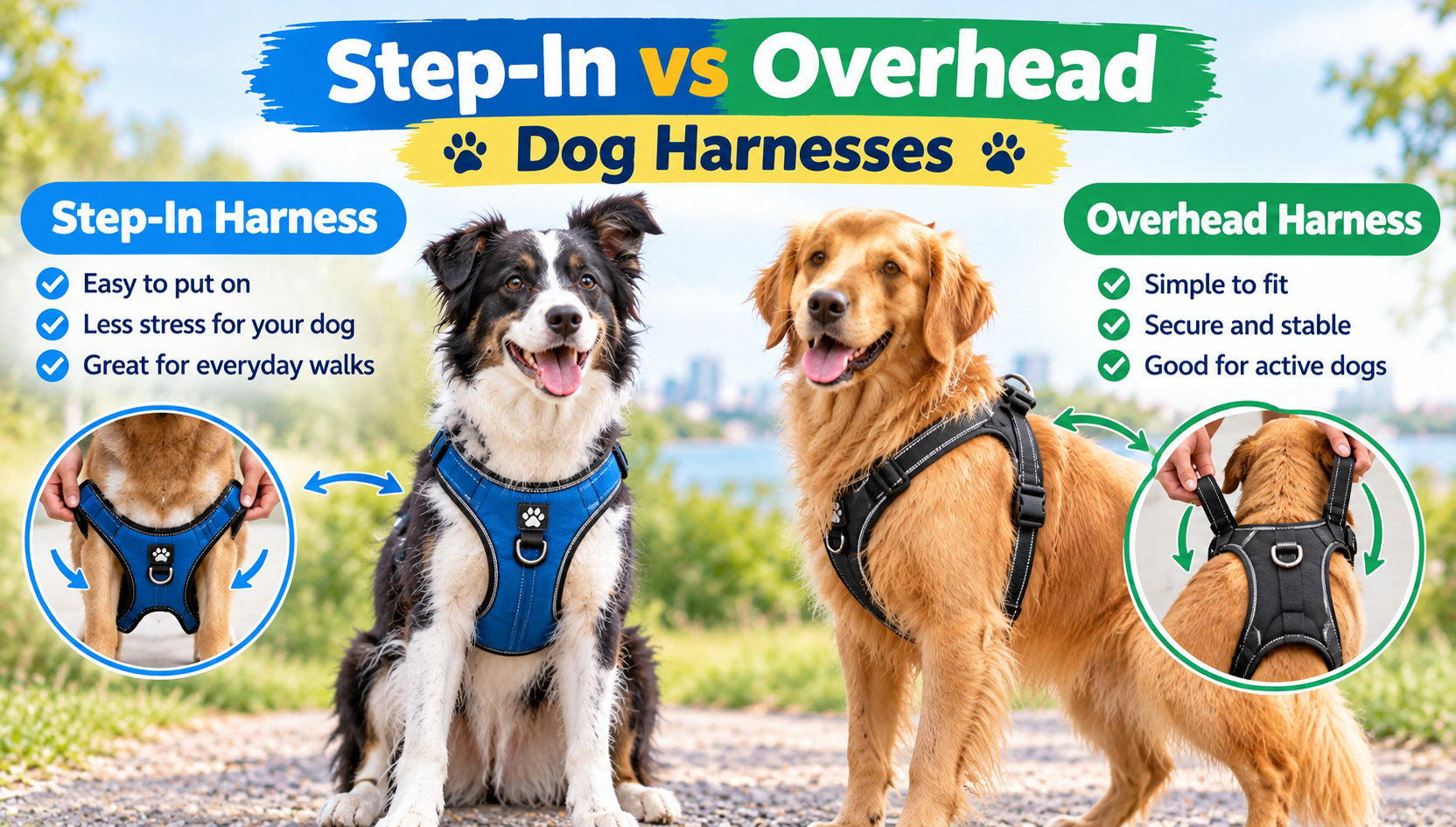
A step-in harness opens on the ground so the dog places the front paws into two loops. The step-in vs overhead dog harness comparison below shows the two styles side by side. An overhead harness passes over the head, then the body straps buckle around the rib cage. Neither style is automatically right for every dog. Your dog's comfort, body shape, movement and the product's adjustment range matter more than the label.
Step-in harnesses: a ground-based routine
Lay the open harness flat and identify the two leg openings before inviting your dog over it. Once the paws are positioned, bring the straps up and buckle them as the manufacturer shows. This style may be easier for a dog who is uncomfortable putting their head through an opening, but some dogs dislike having their legs handled.
Never pull a paw through a loop or force your dog into position. Start with the harness on the floor, reward investigation, and stop if your dog retreats or shows distress.
Overhead harnesses: head first, then adjust
With the harness loose, guide your dog's head through the neck opening, arrange the lower straps between the front legs, buckle the body straps and adjust each point evenly. Kurgo's fitting guidance says the harness should be snug enough to stay centered while allowing two fingers between the harness and the dog; follow your own product's instructions if they differ.
An overhead style may be quick once your dog is comfortable with it. A head-shy dog may need a gradual introduction or a different design. Dogs Trust recommends rewarding small steps and removing the harness if the dog becomes worried.
Fit matters more than the putting-on style
| Check | What to look for |
|---|---|
| Chest and neck | Use the exact model's chart; do not rely on “small” or “medium.” |
| Shoulders | Straps should not cross in a way that restricts natural movement. |
| Security | Your dog should not be able to back out of the adjusted harness. |
| Skin and coat | Look for rubbing, pinching or trapped fur after a short indoor trial. |
Use the harness size chart for measuring and the planned escape-fit guide when it is live. The planned rubbing guide will cover strap placement in more detail.
Choosing between step-in and overhead
Choose the style your dog can wear calmly and that you can fit consistently. A step-in may suit a dog who dislikes head openings but may require comfortable paw handling. An overhead design may suit a dog who accepts head-through equipment but may require slower conditioning for a head-shy dog. If neither is comfortable, ask the manufacturer or your veterinarian for a better option.