No universal size standard exists for dog clothes. A Medium in one brand fits a 12-pound dog while another fits a 40-pound dog. I learned this after ordering a Medium for my 23-pound corgi and watching it arrive barely covering her chest.

The 3 measurements that matter
A 12-pound pug has a very different build than a 12-pound beagle. Weight alone won't tell you which size fits. Measure these three points and compare them to the brand's chart:
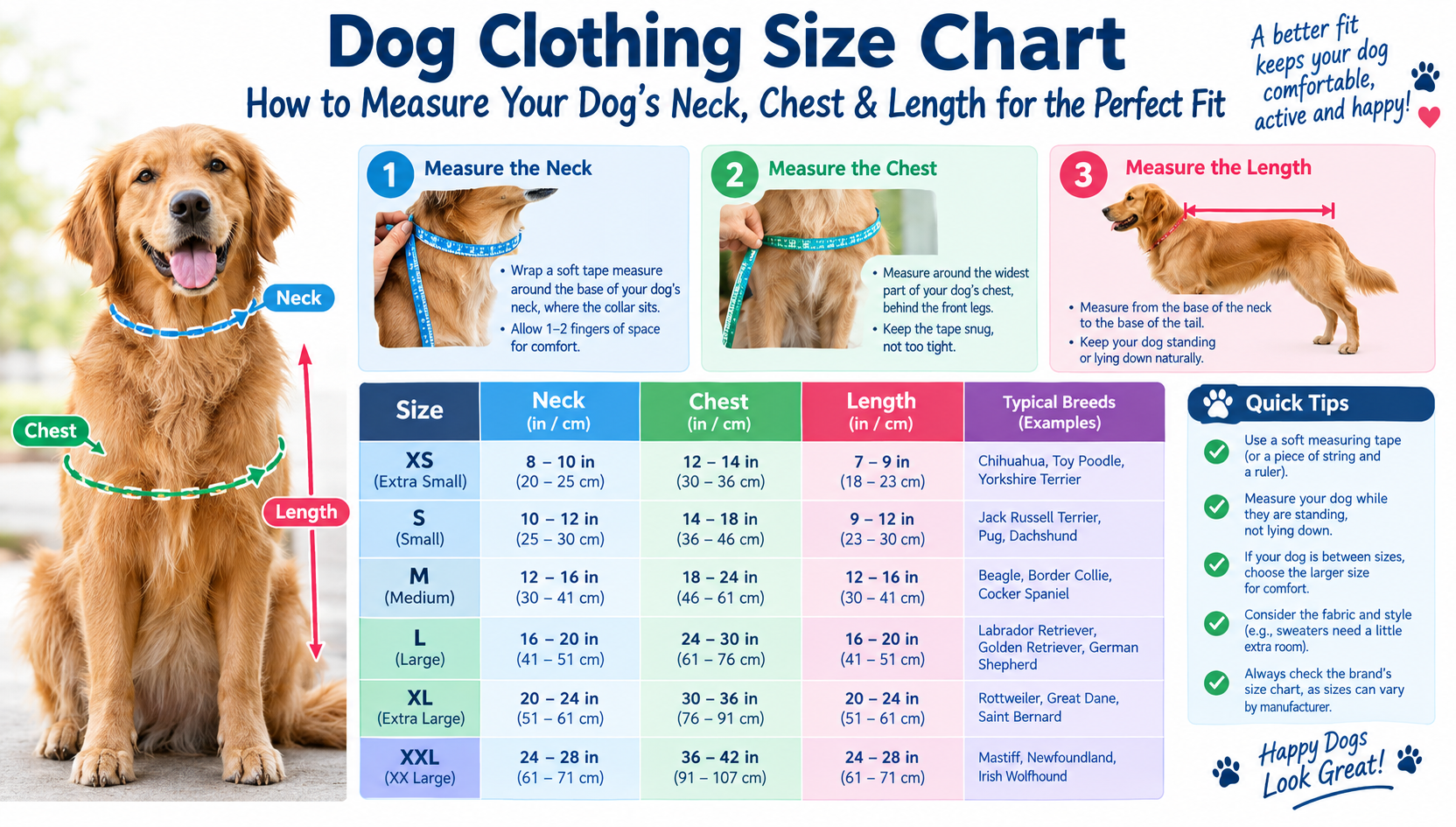
How to measure your dog:
- Neck Girth: Measure around the base of the neck where a collar would sit
- Chest Girth: Measure around the widest part of the chest, behind the front legs
- Back Length: Measure from the collar area to the base of the tail
Use a fabric tape measure or a string and ruler. Measure while your dog is standing.
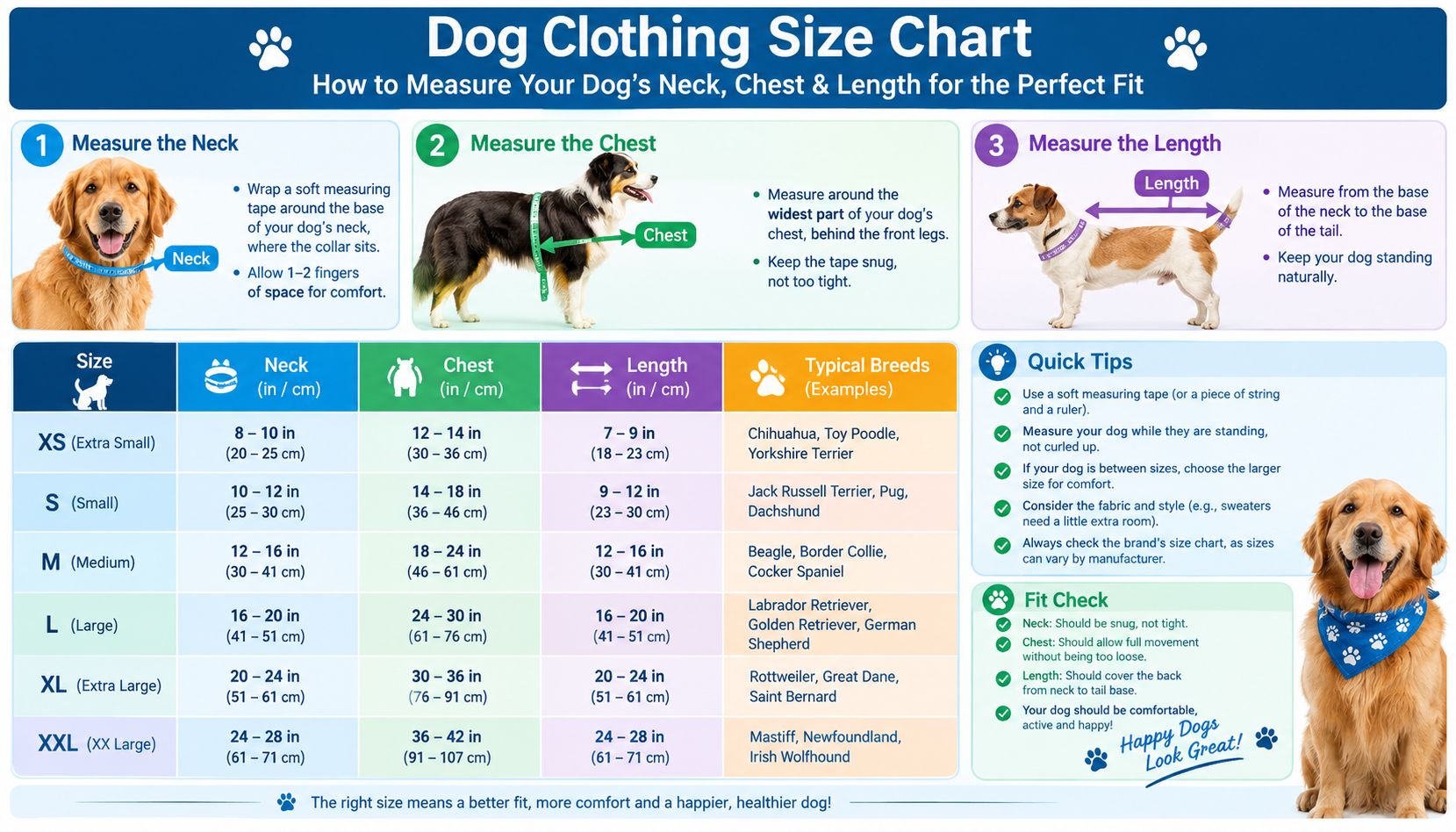
Dog clothing size chart by weight
Many sellers use these weight ranges as a starting point. Verify with the specific product's measurements before ordering.
| Size | Weight Range | Typical Dog Breeds |
|---|---|---|
| XS | Under 10 lbs | Chihuahua, Yorkie, Pomeranian, Maltese |
| Small | 10–20 lbs | Pug, French Bulldog, Beagle, Cairn Terrier |
| Medium | 20–40 lbs | Corgi, Border Collie, Cocker Spaniel, Bulldog |
| Large | 40–75 lbs | Labrador, Golden Retriever, Husky, Australian Shepherd |
| XL | 75+ lbs | German Shepherd, Rottweiler, Great Dane, Mastiff |
Three dogs, three different fits
These examples show why weight alone fails:
- Mable — 9-pound dog: Wears a Small with a 10.5" neck, 16" chest, and 12.5" back length. Despite being under 10 pounds, her proportions put her in a Small rather than XS.
- Hope — 23-pound Corgi mix: Wears a Large with a 20" length and 20" chest. Her deep chest and long back push her well above the Medium range despite weighing under 25 pounds.
- Adam — 10-pound dog: Wears a Small with an 11.5" neck and 17" chest. His broader chest measurement means he needs a roomier fit than weight alone would suggest.
Dog breeds that often need special sizing
Some dog breeds have body shapes that don't fit standard size charts well:
- Pugs & French Bulldogs: Wide chests often require sizing up — a 12-pound pug may need a Medium
- Dachshunds: Long backs and short legs need length adjustments
- Corgis: Deep chests and long bodies create unique proportions — often need Large despite low weight
- Bullies & Boston Terriers: Muscular builds with wide necks need chest-focused measurements
- Greyhounds & Whippets: Deep chests and narrow waists require custom or specialty sizing
When to go custom
Some makers offer custom sizing — 19 size options, $15–$60 depending on fabric. Worth it if your dog is between standard sizes, has unusual proportions, or needs a specific fit for medical reasons.
Before you order
- Measure: Neck, chest, and back length — not weight
- Check the chart: Compare to the specific brand's guide
- Size up if between: Looser beats too tight
- Check returns: Verify you can exchange
Hope's chest was 20 inches. That put her in Large despite weighing 23 pounds. The Medium I'd guessed at based on weight never would have worked.
If your dog shows signs of discomfort, restricted movement, or skin irritation from clothing, remove it immediately and consult your vet. Some dogs are not suited to wearing clothing and should not be forced.